
You are here
Dates and palm groves
Why the date palm has been central to Bahraini life for thousands of years, and how to enjoy dates as a visitor.
The north of the main island was once covered with palm groves, fed by freshwater springs. The date palm provided food, building materials, fibre for rope and baskets, and shade, and it remains a symbol of hospitality today.
A tree of many uses
Dates were a staple food that could be stored for months, an essential for pearl-diving voyages and desert journeys. Palm trunks were used as beams in traditional houses and restorations; fronds made roofs, fences and mats; and fibre was twisted into rope. Few plants have been as important to life on the islands.
The seasons of the date
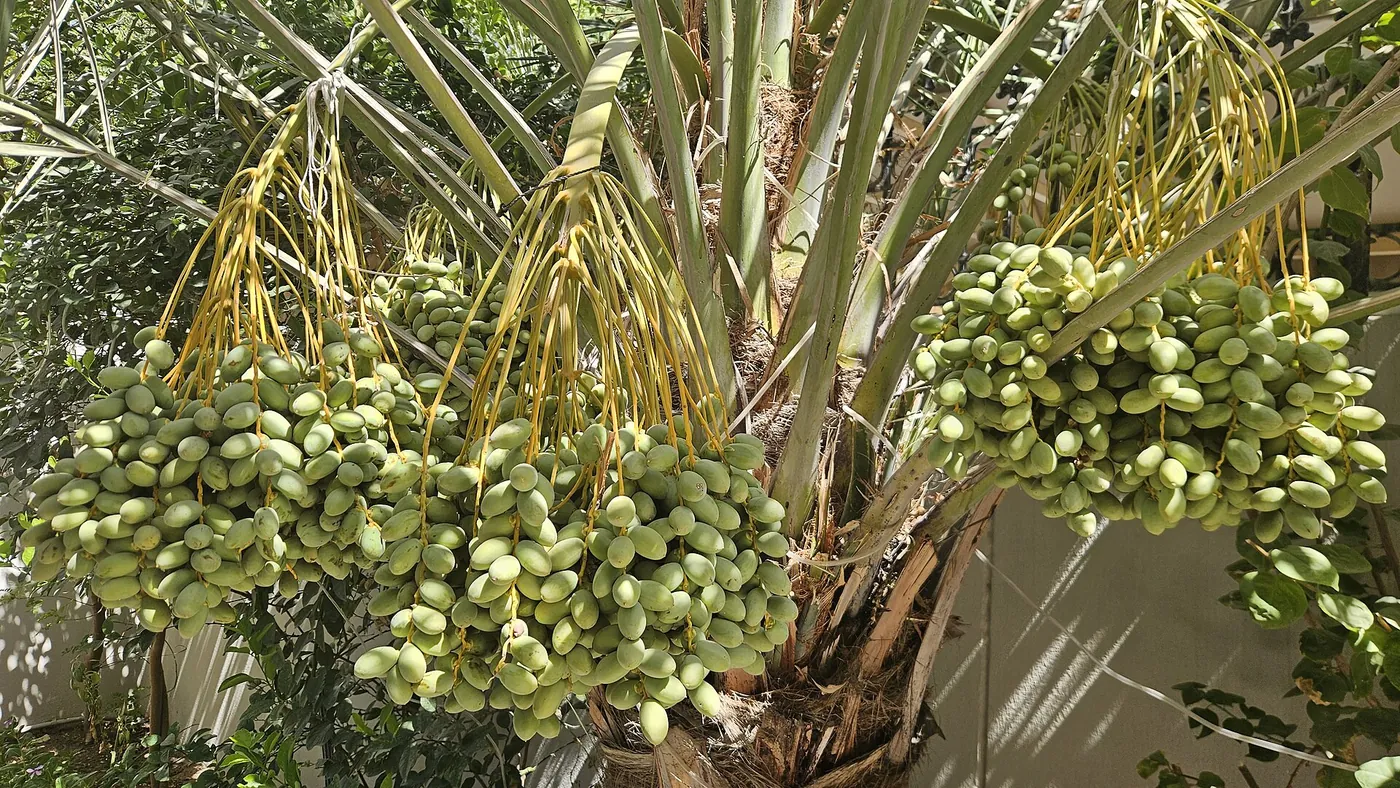
Dates pass through stages as they ripen, from hard green fruit through yellow or red to the soft, brown fresh dates that appear in summer. Fresh dates are a seasonal treat, while dried dates are eaten all year, often with Arabic coffee.
Where to see palms
Palm groves still line parts of the north coast and the villages around the old springs. A drive towards Qal'at al-Bahrain passes through some of them, and the contrast between green groves and nearby towers is one of the striking views of the island.
Enjoying dates
Dates are offered to guests as a sign of welcome, and you will meet them with coffee in homes, offices and hotels. Markets and specialist shops sell many varieties, as well as date syrup, which is used in sweets and in dishes such as muhammar.
Dates in everyday life
Beyond hospitality, dates appear in breakfasts, in sweets, in date syrup drizzled over dumplings and in gifts exchanged at holidays. During Ramadan, the fast is traditionally broken with dates and water before the evening meal, a custom you may see in homes, restaurants and mosques.